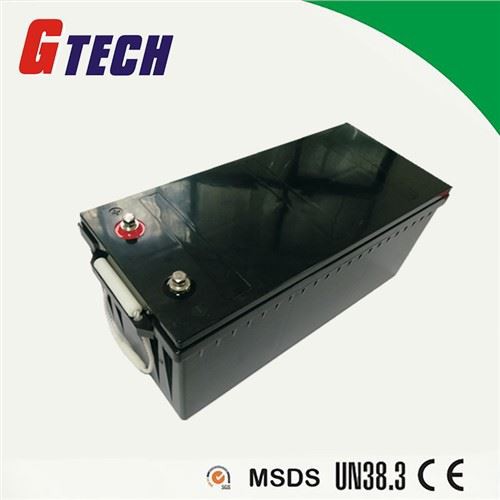
What is LiFePO4 Battery 12v 22ah?
These batteries are designed using only the highest quality components and are backed with our 4 year replacement warranty. This includes the use of a robust Battery Management System (BMS), Nickel plated steel cylindrical cells, and internal protection to reduce movement and damaging vibrations. Our batteries can also be placed on their sides providing versatile installation options.
The integrated Battery Management System is designed to monitor, protect, and optimise each cell within the battery. The BMS maximises the performance of the battery by automatically balancing the cells and protecting them from over charging, over discharging, over temperature, and excessive charge or discharge currents. Our integrated BMS allows our batteries to be used as an alternative replacement for most applications requiring deep cycle batteries, however if the charging system does not support a Lithium charge profile, there are some compromises – please contact us for more information.
Benefits of LiFePO4 Battery 12v 22ah
Temperature Range
LiFePO4 batteries operate efficiently over a wide temperature range. Studies have shown that temperature significantly impacts lithium-ion batteries, and manufacturers have tried various methods to curb the impact. LiFePO4 batteries have emerged as a solution to the temperature problem. They can function well in temperatures as low as -4°F (-20°C) and as high as 140°F (60°C). Unless you live in extremely cold locations, you can operate a LiFePO4 year-round. Li-ion batteries have a narrower temperature range between 32°F (0°C) and 113°F (45°C). The performance will degrade significantly when the temperature is outside this range, and attempting to use the battery could result in permanent damage.
Long Lifespan
Compared to other lithium-ion technologies and lead-acid batteries, LiFePO4 has a much longer lifespan. LFP batteries can charge and discharge between 2,500 and 5,000 times before losing around 20% of their original capacity. A cycle occurs each time you discharge and recharge a battery. A typical lead-acid battery may only provide a few hundred cycles before a decline in capacity and efficiency occurs. This results in more frequent replacements, which wastes the owner's time and money and contributes to e-waste. Additionally, lead-acid batteries typically require considerable maintenance to operate effectively.
High Energy Density
LiFePO4 batteries have a high energy density, meaning they can store more power in less space than other battery chemistries. High energy density benefits portable solar generators since they are lighter and smaller than lead-acid and traditional lithium-ion batteries. High energy density is also increasingly making LiFePO4 the go-to choice for EV manufacturers, as they can store more power while taking up less valuable space.
Safety
LiFePO4 batteries are safer than other lithium-ion batteries, as they offer greater protection against overheating and thermal runaway. In addition, they do not release hazardous gasses like lead-acid batteries. You can safely store and operate LiFePO4 batteries in enclosed spaces like garages or sheds, although some ventilation is still advisable.
Low Self-Discharge
LiFePO4 batteries have low self-discharge rates, meaning they do not lose their charge when unused for long periods. They're ideal for battery backup solutions which might only be necessary for occasional outages or temporarily expanding an existing system. Even if it sits in storage, it is safe to charge and set aside until needed.
Support Solar Charging
Some manufacturers that use LiFePO4 batteries in their portable power stations allow for solar charging with the addition of solar panels. LiFePO4 batteries can supply off-grid power to an entire home when attached to an adequate solar array.
Environmental Impact
The environmental impact was the main argument against lithium-ion batteries for a long time. Whereas companies can recycle 99% of the materials in lead-acid batteries, the same isn't true for lithium-ion. However, some companies have figured out how to recycle lithium batteries, creating promising changes in the industry. Solar generators with LiFePO4 batteries can further reduce environmental impact when used in solar applications.
Product Specification
|
Item |
LiFePO4 Battery 12v 22ah |
|
Brand |
G-TECH |
|
Type |
Lithium Iron Phosphate |
|
Part No.: |
LiFePO4 battery |
|
Voltage Nominal |
12.8V (Customized 3.2V 12V 18V 36V 48V) |
|
Capacity Nominal |
22AH |
|
Normal Charge Current |
Customized |
|
Weight |
/ |
|
Dimension |
Customized |
|
Operating Temperature Range |
Charge: 0 to +60°C |
|
Discharge: -20 to +60℃ |
|
|
Life Cycle |
More than 3000times |
|
Package |
ABS/Metal Case Or Customized |
|
Customized |
Shell, Size, Weight, Color, Label, Current, Technology,etc can be customized |
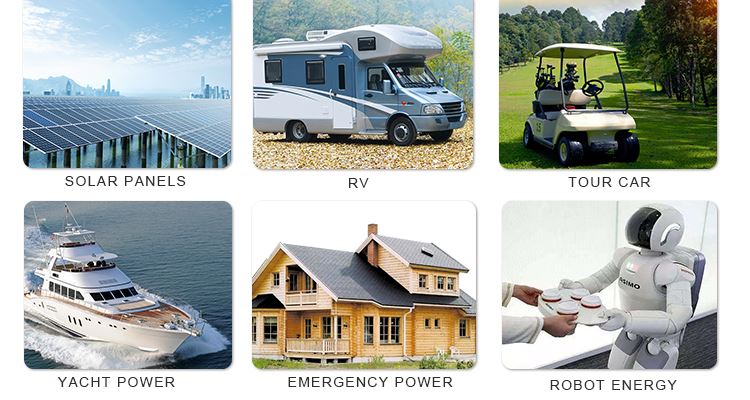
LiFePO4 Battery Applications
Electric Vehicles
LiFePO4 is widely used in electric vehicles, motorcycles, scooters, buses, and cars. These batteries have a long lifespan and high energy density, making them ideal for EVs.
Portable Devices
Many portable electronic devices, such as laptops, tablets, and digital cameras, use LiFePO4 batteries.
Medical Devices
Hearing aids and pacemakers are some sensitive medical devices that feature LiFePO4 batteries, as they offer superior safety and reliability.
Product detailed information
|
MODEL |
Size L X W X T(mm) |
Weight (KG) |
|
12V 6AH |
151*65*95 |
0.8 |
|
12V 12AH |
151*98*95 |
2.5 |
|
12V 18AH |
181*77*168 |
2.8 |
|
12V 24AH |
166*175*125 |
3.2 |
|
12V 50AH |
229*138*205 |
6.5 |
|
12V 60AH |
229*138*205 |
7 |
|
12V 80AH |
260*168*210 |
8.2 |
|
12V 100AH |
330*173*220 |
10.3 |
|
12V 150AH |
330*173*220 |
14.2 |
|
12V 200AH |
522*240*218 |
19 |
|
12v 250AH |
522*268*218 |
24 |
|
12v 300AH |
522*268*218 |
28 |
|
12v 400AH |
522*268*218 |
36 |
Operation Notice.
♦ Do not heat the battery directly or thrown into a fire.
♦ Do not assemble or store in high temperature (over 60 °C) environment
♦ Do not short-circuit the battery directly.
♦ Do not use acid corrosion of the battery casing.
♦ Do not throw it into water or put in wet environment.
♦ Do not knock, impact the battery.
♦ Do not anatomy cell or change the internal structure of the battery.
What is the difference between lithium ion batteries and LiFePO4 batteries?
Lithium batteries have a wealth of applications, from wearable devices such as watches through to electric vehicles, electric tools, and medical equipment.
Compared to other lithium-ion batteries, the LiFePO4 has a lower energy density. This feature makes it unsuitable for small electronic devices but the perfect match for Rvs, bass boats, golf carts, electric motorcycles, and solar energy systems.
Before we look at the differences, let's look at what makes them similar. Both battery types operate using a similar principle. The lithium ion the batteries contain moves between the positive and negative electrode to discharge and charge.
Another similarity is that they are both rechargeable batteries. Finally, both use graphitic carbon electrodes with a metallic backing as the anode.
Differences
Different makeup, chemically: You've probably already noticed this, thanks to their different names. A lithium ion battery will usually have a lithium manganese oxide or a lithium cobalt dioxide cathode. A lithium iron phosphate (LiFePO4) battery is made using lithium iron phosphate (LiFePO4) as the cathode. One thing worth noticing with regards to the chemical makeup is that lithium iron phosphate is a nontoxic material, whereas LiCoO2 is hazardous in nature. This factor makes their disposal a big concern for users and manufacturers.
Newer technology: The technology used in lithium iron phosphate batteries is new than lithium-ion batteries. It has much better chemical and thermal stability. It is less likely to be combustible than a lithium-ion battery, even if you handle it incorrectly.
Different life cycles: You can expect a much longer life cycle with phosphate chemistry. Both batteries already have a fairly long life span. However, lithium iron batteries are more stable if overcharged or short circuited, making them more long-lasting.
Packaging and Delivery
|
Payment Term |
T/T |
EXW |
|
|
FOB |
30% T/T in advance, balance paid before dispatch |
||
|
CNF(CFR) |
30% T/T in advance, |
||
|
CIF |
balance paid againist copy of B/L |
||
|
L/C, Western Union , Paypal |
|||
|
Delivery Time |
7-15 working days after down payment received |
||
Hot Tags: lifepo4 battery 12v 22ah, China lifepo4 battery 12v 22ah manufacturers, suppliers